
Cat nutritional paste is a distinct product format, not simply a supplement powder placed in a tube. Malaysian retailers need to assess what the formula is intended to provide, whether the cat will voluntarily accept it and whether the tube makes the stated instructions practical. A attractive carton or a broad wellness claim cannot answer those questions.
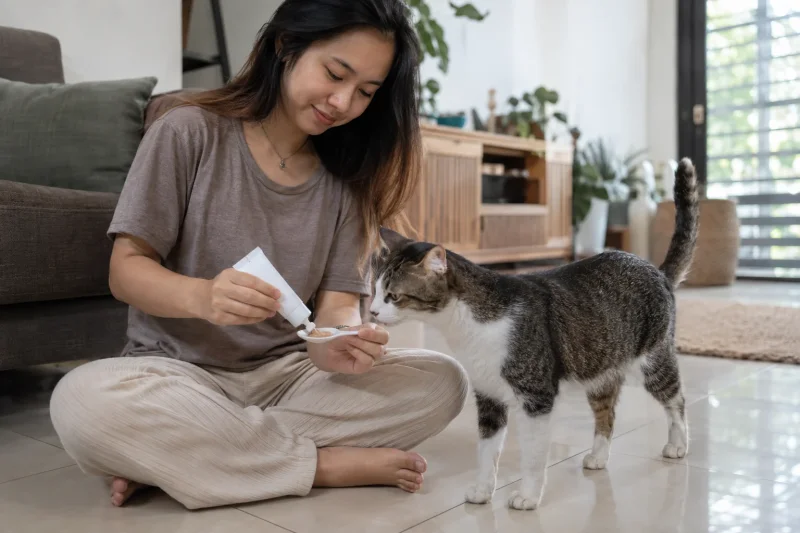
Start with one clear product role
Ask whether the proposed paste is positioned for a defined nutritional purpose, a particular life stage or another documented use. Obtain its full composition, analytical information, intended species, limitations and feeding directions. Do not treat all pastes as interchangeable or imply that an adult-cat product is suitable for a kitten without confirmation.
Distinguish nutritional support from treatment claims. Copy such as “supports daily nutrition” still needs to match the formulation and evidence; claims to prevent or cure disease require a different level of scrutiny. This buying guide is not a recommendation to give a supplement to an individual cat. Owners with health or dietary concerns should consult their veterinarian.
The tube is part of the user experience
Check how the cap opens, whether the initial seal is evident, how consistently paste dispenses and whether the nozzle is easy to keep clean. Examine crimping or end seals, leaks and unintended pressure release. A tube that suddenly dispenses a large amount can make otherwise clear instructions difficult to follow.
If directions use grams, ask how the user is meant to measure them. A strip length is only meaningful when validated for that nozzle and formulation. Do not invent a “one squeeze” dose from the illustrative photograph. Cap design, tube diameter, viscosity and storage conditions can change the delivered quantity.
Separate acceptance from health outcomes
A supervised sample trial can help answer whether a cat approaches and accepts a small amount offered in accordance with the product instructions and owner consent. It cannot show that the paste improves immunity, digestion or another health outcome. Record acceptance and usability separately from any reported clinical concern.
- Confirm product suitability and instructions before offering a sample.
- Use a clean utensil and avoid contaminating the tube nozzle.
- Offer voluntarily; do not force-feed for a purchasing trial.
- Record sample identity, batch, storage history and observations.
- Stop and seek appropriate advice if an animal shows an adverse reaction.
Keep different products separate. A cat that refuses one new flavour does not demonstrate a formula defect, while a leaking tube remains a packaging problem even if the paste is readily accepted.
Malaysian distribution needs a confirmed storage plan
Ask for unopened storage conditions, after-opening instructions and the evidence supporting the stated shelf life. Compare those requirements with the actual warehouse, shop shelf and delivery route, including longer shipments where relevant. A room-temperature sample held briefly on a desk does not establish suitability for all transport conditions.
Do not infer shelf life from smell or appearance. Preserve the original batch and date information. Avoid leaving demonstration tubes in direct sun or repeatedly sharing a nozzle between animals. Retail staff should explain the specific instructions rather than applying one rule to every paste brand.
Ingredient transparency matters more than an unsupported badge
Some buyers will ask about ingredient origin and handling. Obtain specific answers rather than inferring certification from a recipe description or a supplier's other products. Our Malaysia packaging and claim-readiness guide explains why such communication needs care. A certification claim should only be used when the product and claim are covered by valid, applicable documentation.
Review the language needed by the intended channel with local partners. The technical sheet, carton, tube and online listing should agree on formula, quantity and directions. A translated headline must not become stronger than the original supported statement.
Compare the commercial units correctly
Calculate price per tube, price per gram and total launch cost, including printed packaging commitments. For illustration, a 60 g tube priced at RM18 equals RM0.30 per gram; this is an arithmetic example, not a current quotation or feeding recommendation. Usable yield, leakage and expired stock also affect the retailer's result.
Start with a purposefully chosen product rather than several tubes with nearly identical benefits. Our Malaysian supplement and functional-treat range article provides the wider assortment context. Paste should have a clear role alongside chews or other formats, not duplicate them without explanation.
What to request from Xinji
Xinji Pet Food offers nutritional-paste development discussions alongside other pet supplement formats. Send the intended nutritional role, cat life stage, formula restrictions, tube format, desired quantities and document requirements. Confirm formula availability, destination-market review, sample performance and packaging details before approving a commercial order.