
Malaysia buyers often need to balance pet category growth with practical sensitivity around ingredient communication, halal-aware positioning and retail trust. This is especially important for cat food and functional treats because buyers may sell through pet shops, ecommerce, veterinary-adjacent stores and private label channels.
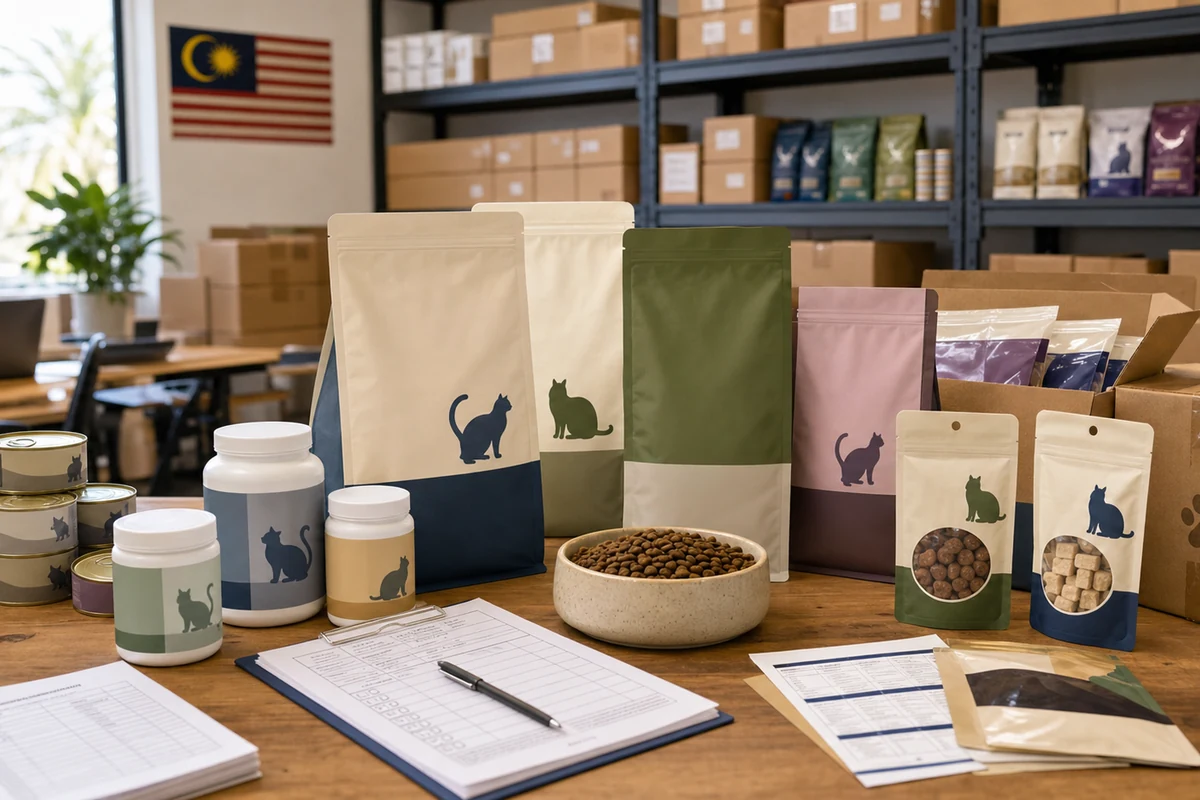
Why cat food is a strong starting category
Cat food can work well for smaller packs, repeat purchases and online bundles. A Malaysia starter range can separate adult cat food, kitten food and one functional add-on. This gives buyers enough range depth without creating too many SKUs for samples, photos and inventory.
Functional treats need careful wording
Soft chews and functional treats can support digestion, skin and coat, joint care or daily vitamins, but wording should stay responsible. Avoid medical promises unless the buyer has completed local review. The safer B2B brief explains product format, intended positioning, ingredient direction and retail education needs.
Halal-aware packaging and document flow
If a buyer wants halal-aware communication, this needs to be discussed before formula, label and supplier comparison. Ingredient source, processing flow, third-party certification expectations and label language can affect the project timeline. Buyers can use official Malaysian halal directories and guidance, such as JAKIM halal status resources, while confirming their exact requirements with local advisers.
Retail readiness is more than a pack design
Pet shops need simple product stories and shelf-ready packaging. Ecommerce needs clear photos, weight, feeding direction and bundle logic. Distributors need carton planning, reorder expectation and price tiers. A single private label design should not be approved until these routes are clear.
- Cat food: start with adult and kitten products.
- Functional treats: prepare cautious benefit wording.
- Private label: define claim style and certification expectations early.
What Malaysian buyers should send
Prepare channel, SKU priority, pack size, formula direction, certification expectation, target price and launch timing. If the project is private label, also send artwork status and label language. This will help Xinji respond with a realistic sample and production route.
Next step
Use the contact page to send a structured Malaysia B2B enquiry. A focused brief is more useful than asking for every cat food and treat option at once.
Malaysia retail range planning
Malaysia buyers often need a range that works for pet shops, online sellers and distributors serving several states. Cat food and functional treats can be attractive because they allow smaller pack sizes, clearer benefit positioning and repeat purchase. The first range should stay focused: one cat food direction, one dog food direction and one treat or supplement line.
Halal-aware communication without overclaiming
Some buyers want halal-aware sourcing, but wording must be careful. Ingredient discussion, process control and document review should be separated from marketing claims. If a certified claim is required, the buyer should confirm the correct local process. The factory brief should specify whether halal-aware positioning is only for internal selection or for public retail communication.
What makes an enquiry actionable
Send target channel, first cities or states, pack size, retail price level, language needs, private label status and expected monthly volume. For ecommerce, include product photo style and bundle plan. For distributors, include carton quantity, pallet handling and reorder forecast. These details help Xinji compare formula, packaging and MOQ choices realistically.